 Pin It
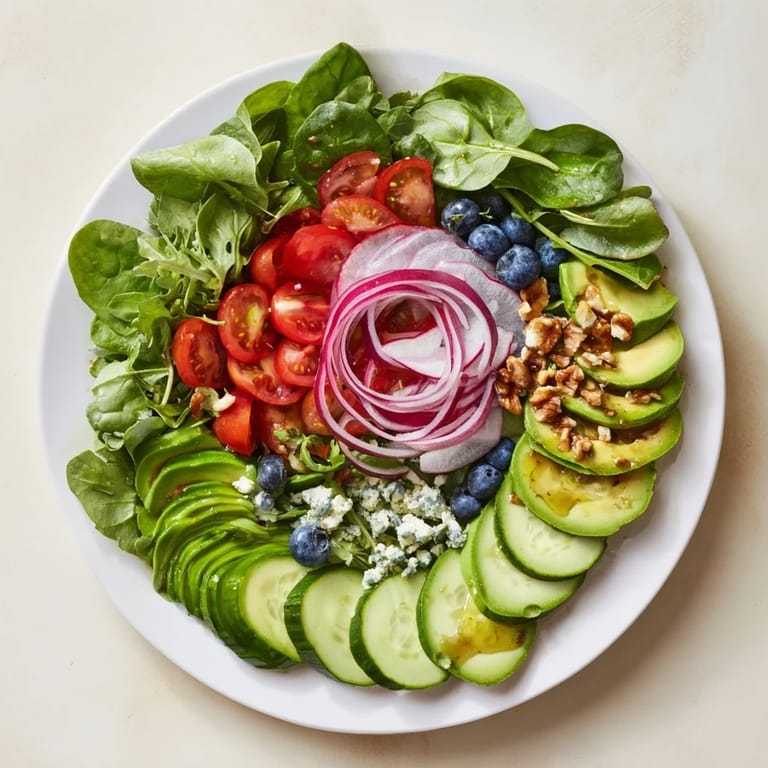
 I stumbled onto this salad by accident while scrolling through an architecture website at lunch, mesmerized by photos of spiraling staircases and golden ratio designs. Something clicked—why couldn't a plate of food follow the same mathematical beauty? That afternoon, I raided my vegetable drawer with renewed purpose, arranging tender spinach leaves in a crescent, then layering arugula, tomatoes, and cucumbers in expanding rings like I was painting a portrait instead of assembling lunch. The first time I set it on the table, my daughter literally gasped before eating it, which felt like the highest compliment a salad could receive.
I made this for a potluck where everyone else brought casseroles and dips, and I was genuinely nervous about bringing something so unconventional. But watching people break formation to gather around the platter, snapping photos before they even grabbed plates, made me realize that food doesn't have to choose between being nourishing and being art. One guest asked if she could serve it at her gallery opening, which I'm still not sure was a compliment or a joke, but I'm choosing to believe it was sincere.
Ingredients
- Baby spinach leaves: The tender green foundation that forms your innermost crescent—use the smallest, most delicate leaves you can find because they're easier to arrange and won't overpower the spiral.
- Arugula: Peppery and slightly bitter, it bridges the gap between mild spinach and bold toppings, creating complexity in each bite.
- Cherry tomatoes: Halved for visual elegance and to catch the light, they provide sweet bursts that anchor the middle sections of your spiral.
- Cucumber: Thinly sliced and refreshing, it adds a clean, watery crunch that keeps the salad from feeling heavy.
- Radishes: These thin, translucent slices bring a subtle peppery kick and that satisfying crisp texture that makes people reach for another forkful.
- Red onion: Finely sliced and positioned near the outer edge as a thin accent ring, it provides sharpness without overwhelming the delicate greens.
- Avocado: Slice it right before assembly so it doesn't brown, nestling the pieces into the spiral for richness and silky texture.
- Blueberries: The unexpected touch that delights people—their sweetness plays beautifully against the peppery arugula and sharp onion.
- Toasted walnuts: Already toasted means you're adding depth and nutty flavor without extra steps, and they won't get soggy if you sprinkle them just before serving.
- Crumbled feta cheese: Tangy and salty, it ties all the flavors together and provides visual contrast across the spiral.
- Extra-virgin olive oil: Use something you actually love because this dressing isn't hiding behind cream or vinegar—it's front and center.
- Lemon juice: Bright and alive, it wakes up every layer and prevents the avocado from turning brown.
- Honey: A whisper of sweetness that rounds out the Dijon mustard's sharp edge and complements the blueberries.
- Dijon mustard: The secret that makes this dressing taste sophisticated without being heavy or acidic.
Tired of Takeout? 🥡
Get 10 meals you can make faster than delivery arrives. Seriously.
One email. No spam. Unsubscribe anytime.
Instructions
- Start with your base spiral:
- Pour your spinach leaves directly onto a large round platter and arrange them in a crescent shape, forming the tight innermost arc of your spiral. Think of it like you're drawing a curve rather than making a salad—the leaves should overlap slightly and feel intentional, like the beginning of a story that's about to expand outward.
- Layer your second arc with arugula:
- Take a generous handful of arugula and fan the leaves outward from where your spinach ended, each leaf overlapping the next like roof shingles, creating the next section of the spiral that's slightly larger than the first. You're building momentum now; the pattern is becoming visible.
- Continue building with cherry tomatoes:
- Arrange your halved cherry tomatoes in the next expanding arc, positioning them cut-side up so they catch the light and show off their gorgeous interior, creating a visual break from the greens and signaling you're moving outward again.
- Add your cucumber sections:
- Layer the thin cucumber slices in the next arc, and here's where you'll notice the ratio really working—each section grows just enough to feel balanced, not overwhelming, creating that golden-spiral satisfaction without anyone knowing why.
- Spiral outward with radishes:
- Thin-slice your radishes on a mandoline if you have one, then arrange them in the next ring, letting their pale pink and white colors create visual interest and their crisp, peppery personality prepare the palate for what's coming next.
- Frame the outer edge with red onion:
- This is your accent ring—finely slice the red onion and arrange it as a thin, delicate border that defines the outer edge of your spiral, providing sharpness without overwhelming.
- Nestle in the avocado and blueberries:
- Slice your avocado just before this step to prevent browning, then tuck the slices into gaps throughout the spiral, spacing them for visual balance, then scatter blueberries across the design like you're a painter adding final color notes.
- Crown with nuts and cheese:
- Sprinkle toasted walnuts and crumbled feta cheese over the entire arrangement, letting them fall where they may to create texture and depth across all the sections.
- Prepare your dressing:
- In a small bowl, whisk together your olive oil, lemon juice, honey, and Dijon mustard until it's emulsified and silky, then taste and season with salt and pepper—this dressing should taste bold enough to stand on its own.
- Finish and serve:
- Drizzle the dressing evenly over your arranged salad just before people sit down to eat, so everything stays crisp and the presentation remains pristine.
 Pin It
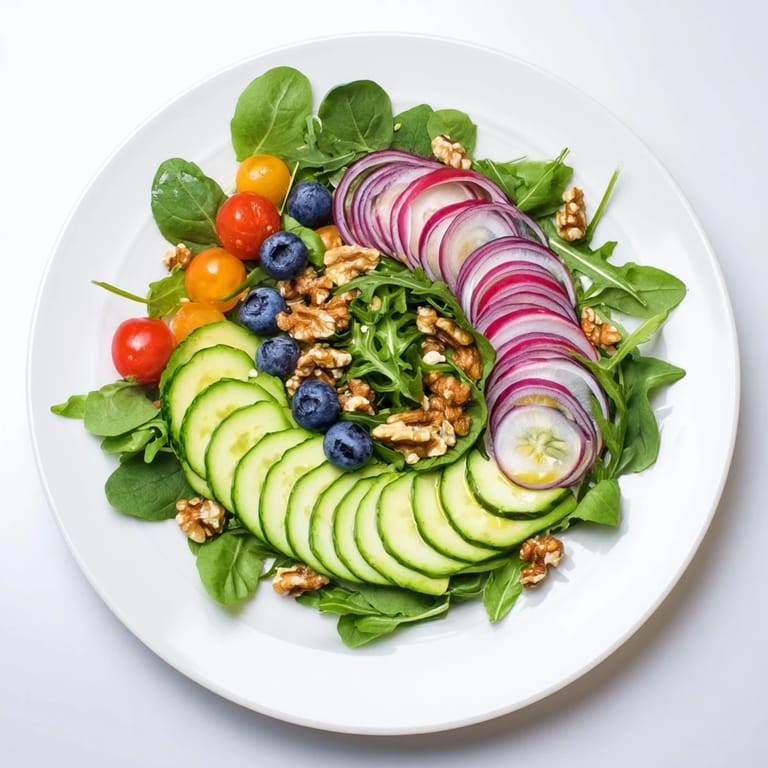
 There's something quietly powerful about taking time to arrange food this way, about saying to people sitting around the table that they're worth something beautiful before they even take a bite. This salad reminds me that nutrition and artistry aren't opposites—they're partners in the same conversation.
The Magic of Visual Eating
I've noticed that when people slow down to look at this salad before eating it, they actually taste it differently, noticing flavors they'd miss if they were just forking through a regular bowl. There's something about the arrangement that makes each ingredient feel important and intentional rather than just stuff thrown together. One friend told me she'd never realized how much the visual presentation affected her appetite until she saw this—now she rearranges her plate at every meal just a little bit differently.
When Vegetables Become Conversation
Serving this salad has become my favorite way to get people talking about food in a different way, because suddenly everyone has opinions about the spiral, the balance, whether the blueberries belong there. A skeptical coworker once sat in my kitchen arguing that sweet and savory don't mix in salad, and by the end of the meal, he was eating a second helping and asking if he could steal the recipe. It's taught me that sometimes the best way to change someone's mind about food is to make it impossible to ignore.
Building Your Own Golden Ratio
Once you've made this once or twice, you'll start improvising, swapping in seasonal vegetables, trying different cheeses, experimenting with how far each arc expands. The Fibonacci sequence is just a guide—what matters is the spirit of it, the intentionality, the care you take in arranging each element. I've made versions with shredded beets, roasted chickpeas, pomegranate seeds, and grilled chicken, and each one feels like a new conversation with the same fundamental idea.
- Substitute seasonal vegetables—roasted beets, shredded carrots, or thinly sliced fennel all spiral beautifully and bring different flavors.
- Add protein by nestling grilled chicken, crispy chickpeas, or a soft egg into the spiral without disrupting the pattern.
- Make the dressing your own by swapping lemon for lime, trying balsamic vinegar, or adding a tiny splash of maple syrup instead of honey.
 Pin It
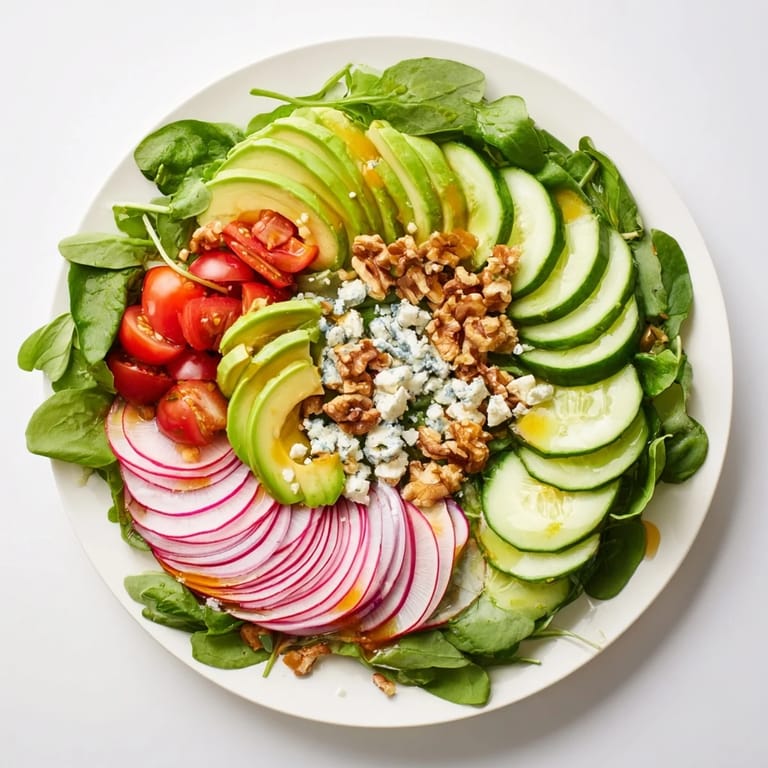
 This salad has become proof that feeding people well and making them feel seen aren't separate acts—they're the same gesture. Serve it with confidence and watch what happens when beauty and nourishment show up on the same plate.
Recipe FAQs
- → How should the greens be arranged?
Arrange spinach and arugula in overlapping arcs that expand outward, creating a visually pleasing spiral effect.
- → Can I substitute any ingredients?
Yes, goat cheese can replace feta, and grilled chicken or chickpeas can be added for extra protein.
- → What is the purpose of the dressing?
The olive oil and lemon juice dressing enhances the natural flavors and adds a tangy, balanced finish.
- → Are nuts essential for this dish?
Toasted walnuts contribute crunch and depth, but can be omitted for allergies or preferences.
- → How to maintain presentation quality?
Serve immediately after assembling to preserve color, texture, and overall freshness.