 Pin It
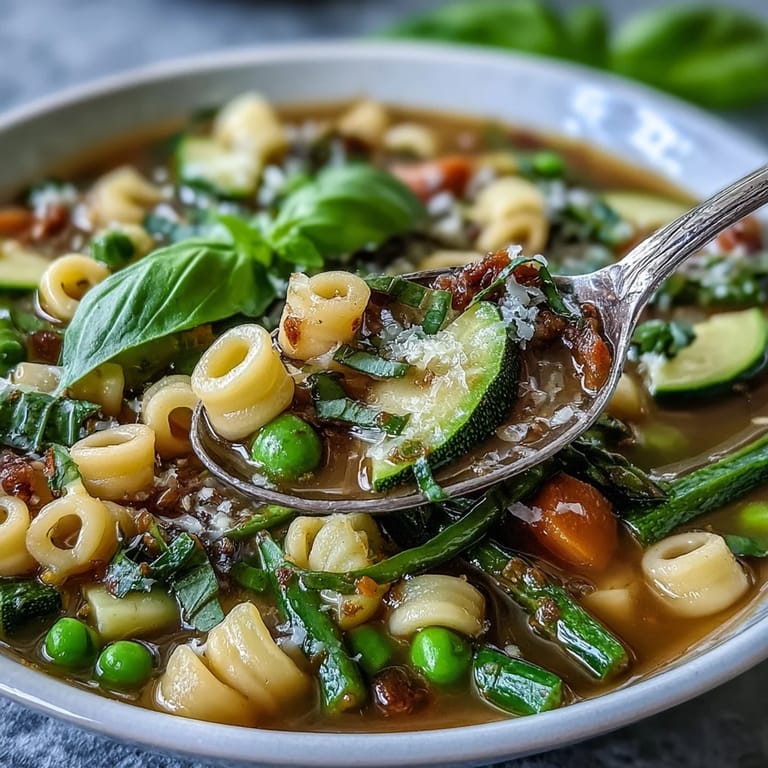
 There’s a particular kind of happiness in the kitchen when the first green beans of the season snap between your fingers. I leaned in over the cutting board, window open, the scent of fresh parsley mixing with a faint breeze while chopping vegetables for this spring minestrone. It’s the sort of soup that almost cooks itself, each ingredient getting its turn in the spotlight, and the whole pot humming with the colors of the season. There’s an ease to it: not fussy, just honest and bright. On the first really warm afternoon, the promise of a light, herby soup felt just right.
One evening, I made this soup while chatting with a friend who had just returned from the farmers’ market, trading tips on how to sneak in extra vegetables. We laughed over tiny mishaps—her runaway peas, my over-enthusiastic parsley chopping—both of us marveling at how forgiving this recipe can be. The whole kitchen smelled like green things waking up after winter, and suddenly, the table felt welcoming again. Even my somewhat picky neighbor called from next door, asking what smelled so good. By the end of dinner, every bowl was scraped clean.
Ingredients
- Olive oil: A good glug is essential for coaxing out the flavors in your onions and garlic—choose extra-virgin if you want a peppery finish.
- Onion: Finely chopped, it melts into the broth and builds the savory backbone of the soup.
- Garlic: Mince it fresh—the aroma is more pungent and sweet, especially when you add it after the onion softens.
- Carrots: Their sweetness balances the green veggies; dice them small so they cook in sync.
- Celery: Brings a gentle, earthy saltiness that makes the broth taste grown up.
- Zucchini: Softens just enough to be tender without dissolving—add it after the aromatics for best texture.
- Peas: Fresh if you can, frozen in a pinch; they add a pop of color and a touch of sweetness.
- Baby spinach: Tossed in at the end, it barely wilts, turning everything vibrant green without getting soggy.
- Green beans: Their crunch is pure spring; cut into bite-sized pieces for ideal spooning.
- Vegetable broth: Use low-sodium so you can control the salt—homemade if you’re feeling ambitious.
- Bay leaf: Just one, but it quietly deepens flavor while simmering.
- Small pasta shapes: Ditalini or tiny shells soak up the broth without getting overcooked; al dente is the goal.
- Fresh parsley: Rough-chopped for a grassy, herbal finish stirred in at the end.
- Salt: Season in stages, tasting as you go—start light and adjust near the end.
- Black pepper: Freshly ground is worth the trouble for a gentle, aromatic heat.
- Parmesan cheese: Not required, but a generous grating before serving adds richness (vegan alternatives welcome).
- Fresh basil: Tear it over each bowl—it adds perfume and brightness you can’t get anywhere else.
- Extra olive oil: A final drizzle is pure luxury—choose your fanciest bottle here if you like.
Tired of Takeout? 🥡
Get 10 meals you can make faster than delivery arrives. Seriously.
One email. No spam. Unsubscribe anytime.
Instructions
- Start with aromatics:
- Pour the olive oil into your soup pot over medium heat. Once it shimmers, stir in the onion and cook, listening for that gentle sizzle for about 2–3 minutes until translucent—but not browned.
- Add base veggies:
- Toss in the garlic, carrots, and celery. Sauté for 4 minutes, stirring occasionally, until the kitchen smells sweet and the vegetables look softened but still have a hint of crunch.
- Bring in the greens:
- Next up are the zucchini, green beans, and peas—give them just 2 minutes so they hold their color. Stir gently, letting everything mingle in the pot.
- Simmer with broth:
- Pour in the vegetable broth and add the bay leaf. Turn up the heat to bring it to a gentle boil, then let it settle to a steady simmer.
- Pasta time:
- Add in your chosen pasta and cook according to the package—usually 8–10 minutes—stirring occasionally so nothing sticks, tasting for al dente.
- Finish with greens:
- In the final 2 minutes, add the baby spinach and parsley. Stir and watch the spinach wilt before your eyes, turning the soup a lush green.
- Season and serve:
- Fish out the bay leaf, season the soup with salt and black pepper. Ladle into bowls and top with Parmesan, scattered basil, and a final flourish of good olive oil if you like.
 Pin It
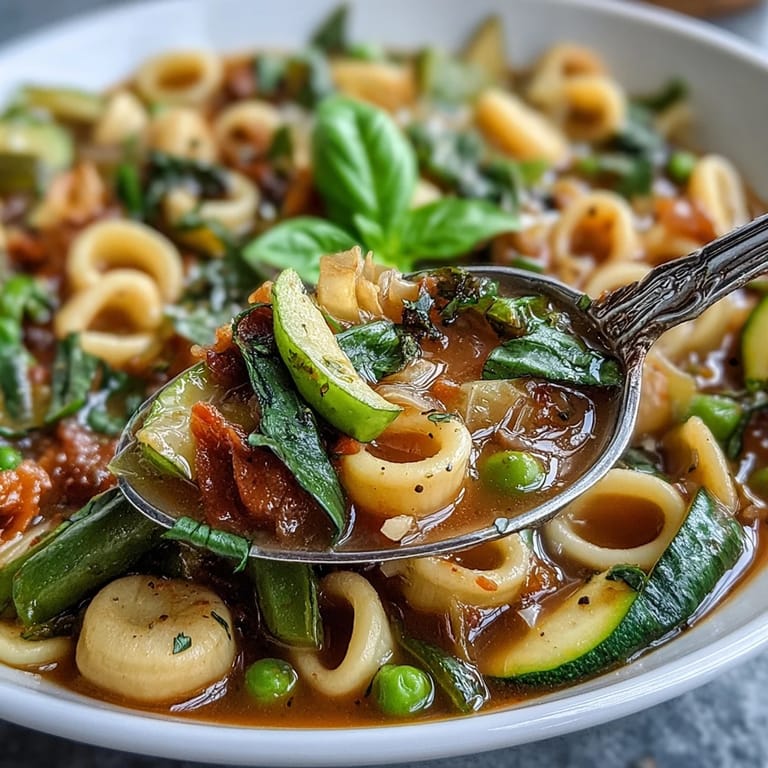
 One afternoon, this minestrone turned an ordinary lunch into a picnic on the living room rug—a spontaneous celebration simply because the soup was too pretty to eat at the table. My little niece insisted her doll needed a bowl, too, and we spent half the meal debating the best pasta shapes as the sunlight caught flecks of basil in our bowls.
The Joy of Cooking with the Seasons
It feels good to let what’s fresh guide the meal—sometimes asparagus appears in my spring minestrone if it’s at the market, or a handful of fava beans if I find them. Giving yourself permission to improvise makes the soup taste new each time. Just remember not to overwhelm the broth with too many different vegetables—three or four main green things, and let the rest be subtle.
Pasta Picking Wisdom
I’ve learned that small pasta shapes like ditalini or orzo don’t hog the spotlight and are less likely to turn mushy if you eat leftovers the next day. If you cook the pasta separately and add it at serving time, the broth stays clear and pleasant, not gummy. Gluten-free pasta holds up surprisingly well if you peek at it early for doneness.
Serving and Savoring
To really make this soup shine at the table, serve it with a warm crust of bread and let everyone garnish their own bowl with cheese or fresh herbs. I always keep a little extra olive oil on hand for a final swirl before serving—somehow, it elevates everything. Conversation has a way of lingering a little longer when there’s a fresh, light soup in front of you.
- Let the soup rest for five minutes before you serve so flavors meld.
- Don’t be shy with the fresh herbs at the end—they make all the difference.
- If serving leftovers, add a splash of broth to freshen it up before reheating.
 Pin It
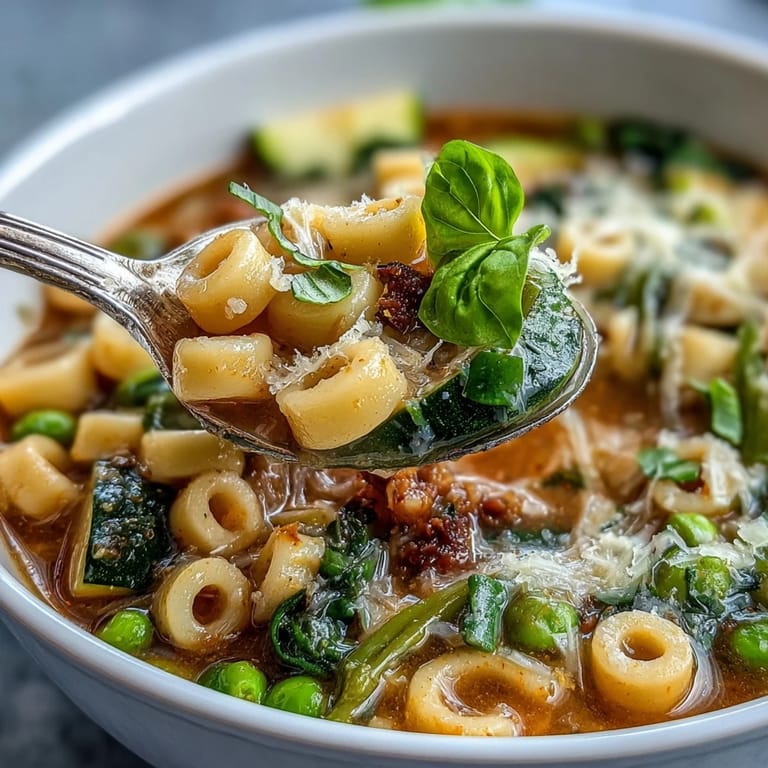
 Spring minestrone doesn't just welcome the new season—it invites everyone at the table to enjoy the garden’s return together. May each bowl you serve bring a bit more color and conversation to your day.
Recipe FAQs
- → How long should the pasta cook in the soup?
Use small shapes like ditalini or orzo and cook 8–10 minutes, or until al dente. Begin timing once the broth returns to a simmer after adding the pasta to avoid overcooking.
- → Can I make the dish vegan?
Yes. Omit the Parmesan or use a plant-based alternative and confirm the broth is vegetable-based. A drizzle of good olive oil and fresh herbs keeps the flavor bright.
- → Which spring vegetables are best to add?
Peas, asparagus tips, fava beans, young zucchini, green beans and baby spinach are ideal. Add firmer vegetables earlier and tender greens in the last minutes to preserve texture and color.
- → How do I keep vegetables from getting mushy?
Cook sturdier vegetables until just tender, then add delicate ones like spinach in the final 1–2 minutes. Avoid boiling vigorously once pasta and tender greens are added to maintain texture.
- → What are good serving suggestions?
Serve hot with grated cheese, fresh basil and a drizzle of olive oil. Offer crusty bread or a simple green salad to round out the meal.
- → How should leftovers be stored and reheated?
Refrigerate in an airtight container for 3–4 days. Pasta may absorb broth on standing; reheat gently on the stove with a splash of broth or water to restore the desired consistency.