 Pin It
 I'll never forget the moment I realized that a platter could be art. It was at a gallery opening downtown, where I'd volunteered to bring appetizers, and I found myself staring at the white walls and thinking: what if the food matched the minimalist vibe? That's when the zig-zag idea struck me—sharp angles, bold contrasts, a bolt of color that would make people pause before they even tasted anything. I rushed home and started experimenting with every vibrant ingredient I could find, arranging them on my grandmother's old serving board in aggressive diagonals. When guests arrived that night, they stopped talking the moment they saw it. It wasn't just food anymore; it was a conversation starter, a moment of visual joy before the first bite.
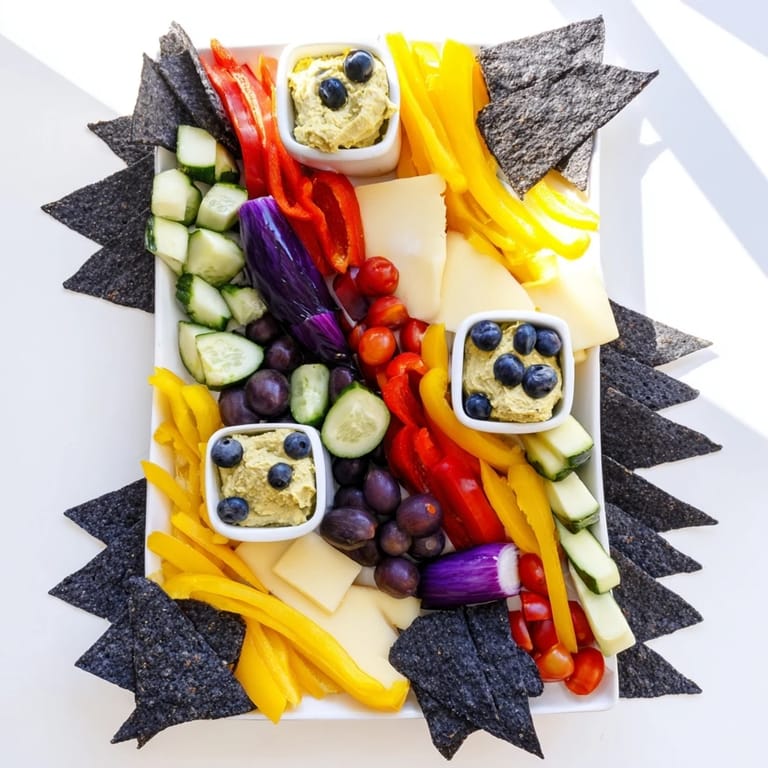
My sister brought her new partner to dinner last spring, and I wanted to impress without looking like I'd tried too hard. I arranged this board in about fifteen minutes, and what I love most is that they kept talking about it weeks later. Not just how beautiful it was, but how it made them feel—like they were part of something intentional and special. That's when I knew this arrangement had something real going for it.
Ingredients
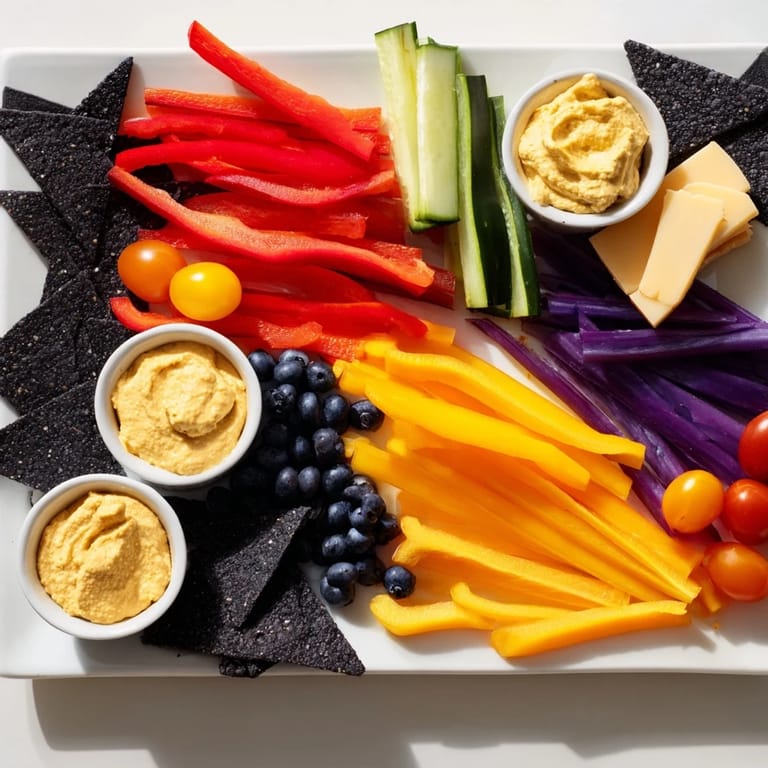
- Red and yellow bell peppers, cut into strips: These are your boldest colors, so don't skip them. They stay crisp for hours if you cut them the day before and store them in a sealed container—trust me, prep work is a friend here.
- Cucumber sticks: The mild refreshment of the board. Cut them slightly thicker than you think you need so they don't become bendy and sad. Cutting on a diagonal gives them more surface area and looks more intentional.
- Purple carrots, sliced into sticks: If you can find them, grab them. If not, regular carrots work beautifully too, though you lose that luxe color contrast. Fun fact: I discovered purple carrots exist only when assembling my first zig-zag.
- Sharp white cheddar and black wax gouda, sliced thin: Cheese is your anchor for texture and richness. The angularity matters—slice them at slight angles to echo the zig-zag theme. Sharp cheddar has tang; gouda has depth. Together, they're unstoppable.
- Blueberries and golden cherry tomatoes: These are your jewels. Arrange them like you're placing stars in a constellation. They catch light and draw the eye exactly where you want it.
- Beet hummus and classic hummus: The dips are crucial for flavor and for breaking up color blocks. Small bowls placed strategically make people pause and actually sit with the board for a moment.
- Blue corn tortilla chips and black sesame rice crackers: Crunchy elements that frame the whole arrangement. The colors amplify the contrast, and they're sturdy enough to scoop dip without falling apart (usually).
Tired of Takeout? 🥡
Get 10 meals you can make faster than delivery arrives. Seriously.
One email. No spam. Unsubscribe anytime.
Instructions
- Wash and prepare everything:
- Give your vegetables a gentle rinse and pat them dry—wet produce makes the board look sad and slides around when people try to grab pieces. As you prep, lay out each ingredient in little piles on your counter so you can see what you're working with and adjust quantities if needed.
- Start with your base:
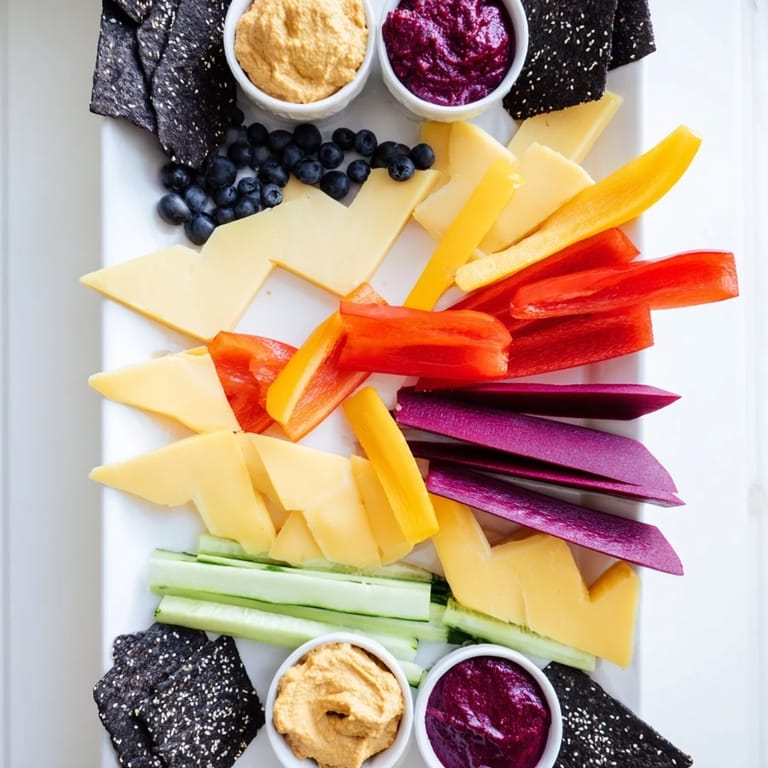
- Place that large board in front of you and take a breath. This moment matters. Mentally draw a diagonal line from one corner to the opposite corner—that's your lightning bolt. You're going to build along this line with confidence.
- Lay down your first color:
- Begin with red pepper strips along your zig-zag line. Don't space them perfectly; let them overlap slightly and overlap with confidence. This is art, not a geometry lesson.
- Alternate with stark contrast:
- Next to the red, place white cheddar slices. Then yellow pepper. Then black gouda. Then cucumber. You're creating a visual rhythm where each ingredient sings against its neighbor. Step back every few pieces and look at it with fresh eyes.
- Weave in the purple carrots:
- These go in the gaps and alongside the bell peppers, creating depth and pulling the eye down the zig-zag. They're the bridge between your warm and cool tones.
- Position your dips strategically:
- Place small bowls at what feel like natural junction points—maybe one at the top corner, one in the middle, one at the bottom. This breaks up the ingredient line and gives the arrangement rhythm and purpose.
- Frame with crunchy elements:
- Tuck chips and crackers along the edges of your zig-zag to reinforce that angular shape. They should look like they're intentionally framing the star players, not scattered randomly.
- Scatter your jewels:
- Finally, distribute blueberries and halved cherry tomatoes along the zig-zag line and in the spaces between elements. These are your highlights—place them where they catch light and where your eye naturally travels.
- Step back and admire:
- This is the moment where you see if it sings. Does it feel balanced? Do the colors pop? If something feels off, don't overthink it—move a piece, add a berry, trust your instincts. This should take a few minutes, and it's actually the most enjoyable part.
- Serve immediately:
- Keep it covered in the fridge until the moment guests arrive. Freshness and visual impact are both non-negotiable here.
 Pin It
 Last summer, my ten-year-old niece was bored waiting for the rest of the family to arrive for lunch, and I asked her to help me build the zig-zag. She arranged the colors with the intensity of someone solving a puzzle, and when everyone came in, she stood by the board with pride written all over her face. Food became her creation that day, and I watched her confidence bloom. That's when I realized this recipe isn't just about feeding people—it's about inviting them into the creative process and making them feel like their eye for beauty matters.
Why the Zig-Zag Shape Matters
A straight line is boring. A spiral is expected. But a zig-zag feels like movement and energy—like lightning actually captured on a board. When you arrange food at angles instead of parallel lines, something shifts in how people perceive it. They see intention. They see art. They're more likely to linger, to really look before they taste, and that moment of pause is where magic happens.
Building Color Contrast Like You Mean It
The secret isn't just using bright colors; it's about playing them against each other in unexpected ways. Red beside white is classic. But red beside black gouda? That's when something feels luxe. Yellow next to purple carrots? Suddenly every color feels more vibrant. Think of it like a painter mixing a palette—complementary colors make each other sing. Spend a moment actually looking at your ingredients and thinking about which colors are sleeping next to each other. That small moment of intention changes everything.
The Textures That Keep People Coming Back
Visual appeal gets people to the board. Texture keeps them there. A board that's only soft ingredients (like dips and cheese) feels unfinished. Add crunchy chips, tender berries, crisp vegetables, and creamy dips all in one bite, and you've created an experience. That's the difference between a nice snack and something people will remember. Each bite should surprise the mouth a little—softness giving way to crunch, sweetness followed by tang, familiar flavors next to something unexpected.
- Don't skip the chips and crackers—they're structural and essential to the whole vibe
- If your board sits out longer than thirty minutes, swap out any vegetables that might have started to wilt and add fresh ones
- The contrast of temperatures matters too: if you've kept anything cool, let it stay cool. If something comes to room temperature, that's fine too, but be intentional about it
 Pin It
 This board isn't just for fancy parties or gallery openings. It's for Tuesday nights when you want to feel a little bit celebrated, for feeding your friends something that tells them you care, for moments when food becomes memory. Make it, share it, and watch how something as simple as intentional arrangement transforms an ordinary platter into something people talk about.
Recipe FAQs
- → How do I create the zig-zag layout effectively?
Arrange vegetables, cheeses, and fruits in diagonal alternating colors across a rectangular board to emphasize the angular pattern. Place dips and crunchy elements strategically to highlight each bend.
- → What vegetables work best for sharp angular cuts?
Bell peppers, cucumbers, and purple carrots sliced into long sticks provide clean edges and vibrant color contrasts essential for the design.
- → Can this be adapted for dietary preferences?
Yes, cheeses can be replaced with plant-based alternatives for vegan needs, and gluten-free crackers ensure suitability for gluten-sensitive guests.
- → What dips complement the platter's flavors?
Beet hummus adds earthy sweetness, while classic hummus offers creamy, savory balance enhancing the fresh ingredients.
- → How to maintain freshness and visual impact?
Prepare ingredients shortly before serving, arrange on a clean board, and serve immediately to keep crisp textures and vibrant colors.