 Pin It
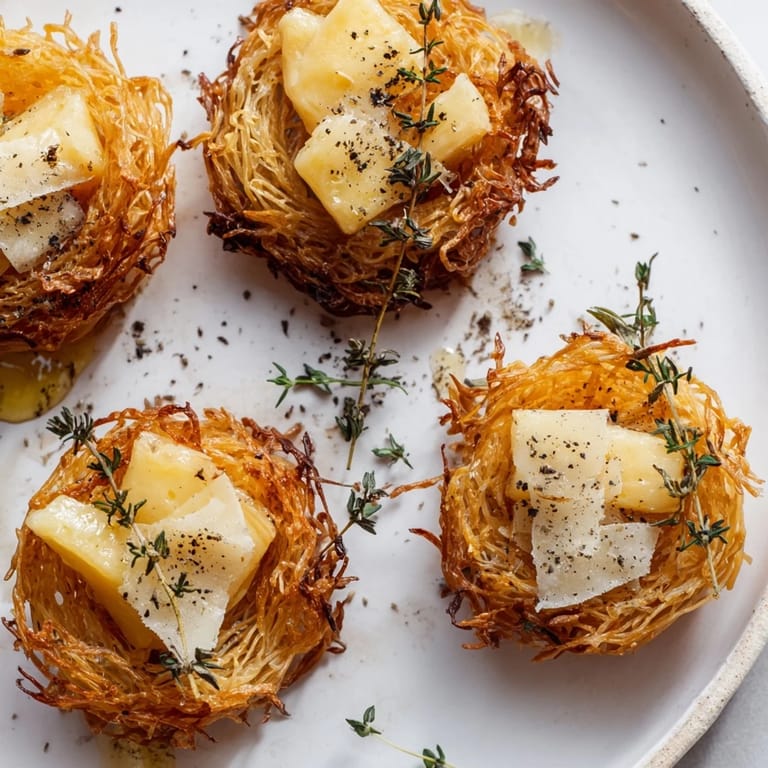
 I stumbled onto this appetizer on a crisp autumn afternoon when I was rifling through my pantry, trying to salvage some phyllo dough before it went stale. My hands still remember the delicate, papery texture as I separated those fine shreds, and suddenly I envisioned them as little golden nests waiting to cradle something special. The idea of perching rustic farmhouse cheeses on top felt like capturing a moment from a countryside picnic, the kind where everything tastes better because the setting is right.
The first time I served this, I watched my friends' faces light up as they picked up a nest and bit into it, honey dripping slightly onto their fingers. One of them said it tasted like something they'd had at a farmhouse dinner in Provence, but homier somehow. That compliment stuck with me more than any fancy plating ever could.
Ingredients
- Shredded phyllo dough (kataifi), 200 g: This is the magic ingredient that creates those crispy, hay-like nests. It's more forgiving than full sheets of phyllo because the strands hold together beautifully when tossed with butter, and you don't need to worry about tearing.
- Unsalted butter, melted, 50 g: Melted butter is your adhesive, coating each strand so they toast evenly and turn golden rather than burning. I always use unsalted so the cheese flavors stay in the spotlight.
- Olive oil, 1 tsp: This adds a subtle richness and helps prevent the butter from browning too quickly in the oven.
- Sea salt, pinch: Just enough to season the phyllo without overpowering anything else.
- Farmhouse cheddar, 200 g, cut into rustic hunks: The cheddar brings a sharp, grounding flavor that anchors the whole thing. Cut the pieces generously and uneven so they look intentional and farmhouse-y.
- Aged gouda, 150 g, cut into rustic hunks: Aged gouda has this deep, slightly sweet nuttiness that plays beautifully against the crispy phyllo. The older the cheese, the more personality it brings.
- Tomme de Savoie or semi-soft farmhouse cheese, 150 g, cut into rustic hunks: This creamy cheese offers a different texture and mellows out the sharpness of the cheddar. If you can't find tomme, any semi-soft cheese with a gentle tang works.
- Fresh thyme sprigs (optional): A few green leaves add a whisper of herbaceousness and make everything feel more intentional.
- Honey for drizzling (optional): Just a touch of honey creates this beautiful sweet-savory moment that catches people off guard in the best way.
- Cracked black pepper: The final gesture, adding a small bite and visual contrast.
Tired of Takeout? 🥡
Get 10 meals you can make faster than delivery arrives. Seriously.
One email. No spam. Unsubscribe anytime.
Instructions
- Heat your oven and prep your space:
- Set your oven to 180°C (350°F) and line your baking sheet with parchment paper. This temperature is gentle enough to let the phyllo turn golden without burning.
- Wake up the phyllo:
- Gently loosen the shredded phyllo with your fingers so no strands are clumped together. Place it in a bowl and drizzle with melted butter, olive oil, and a pinch of sea salt, then toss everything together with your hands until every strand glistens.
- Form your nests:
- Take small handfuls of the phyllo mixture and press them onto your parchment paper into little nests about 5 to 6 centimeters wide. Don't be too precious about the shape—rustic is the whole point.
- Toast until golden:
- Slide the sheet into the oven for 10 to 12 minutes, watching until the nests turn that perfect burnished gold. You'll smell them before they're done, and that's your signal to start paying close attention.
- Cool and assemble:
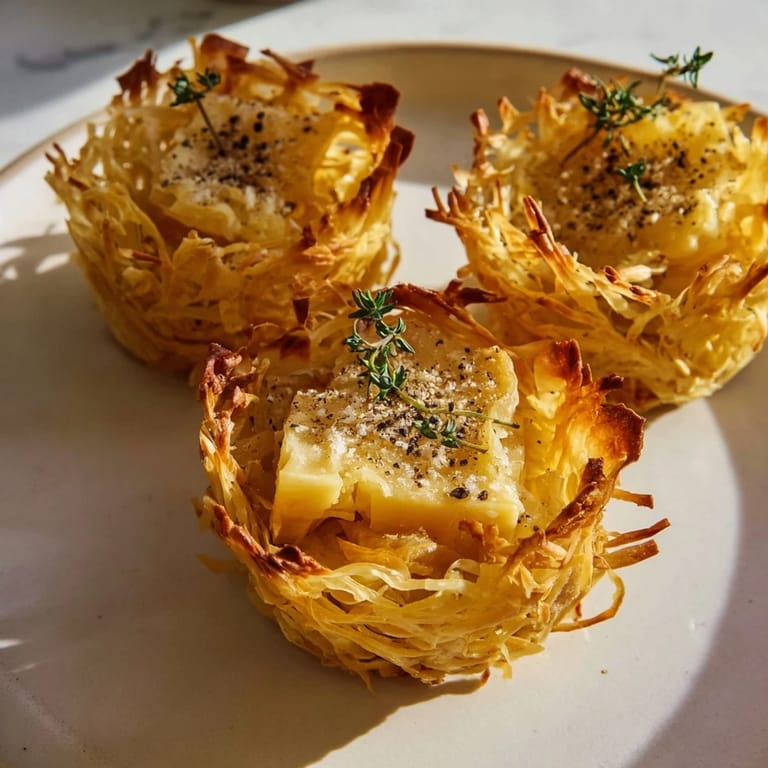
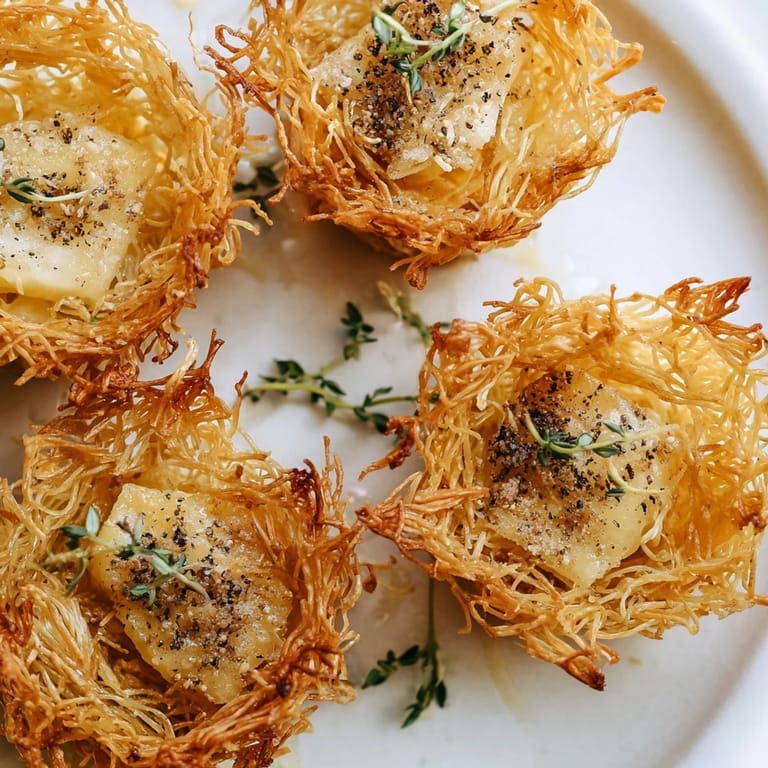
- Let the nests cool to room temperature on the sheet—this is when they crisp up completely and become almost impossibly delicate. Arrange them on your serving board and crown each one with a generous hunk of cheese.
- Add the finishing touches:
- Scatter fresh thyme sprigs over the board, drizzle some cheese with honey if you like, and finish everything with a grind of cracked black pepper. Step back and admire your work.
 Pin It
 There's a moment just after you pull the nests from the oven when the whole kitchen smells like toasted butter and possibility. That smell lingered so long during one dinner party that a friend asked if we'd made something else too. It was just the phyllo, but somehow it had become more than the sum of its parts.
Choosing Your Cheeses
The beauty of this dish is that it's forgiving with cheese choices, so treat this as a guide rather than gospel. Farmhouse cheddar is sharp and reliable, but if you find a really excellent cave-aged cheddar at your market, go for it. Gouda brings a different kind of richness depending on its age, and younger versions are creamier while older ones are almost crystalline. The semi-soft cheese is your wild card—try tomme, comté, gruyère, or even a good smoked farmhouse cheese if that calls to you. The point is to layer flavors and textures so that each nest feels like a small surprise.
Making It Your Own
Once you've made this once, you'll start seeing variations everywhere. Dust the phyllo with herbes de Provence before baking if you want a savory, Mediterranean twist, or add a tiny pinch of smoked paprika for something earthier. Serve the nests alongside apple slices, grapes, or even fresh figs for a little brightness that cuts through the richness. Some people crumble them into salads, others serve them as part of a cheese board, and I've even seen someone tear them up and toss them with greens and a honey-mustard vinaigrette. The structure is just the beginning.
Storage and Make-Ahead Magic
The best part about these nests is that they keep beautifully for a day or two in an airtight container, so you can bake them hours before your guests arrive and store them at room temperature. Only add the cheese and garnishes right before serving so everything stays at its peak. If somehow you have leftover nests without cheese (which would be unusual but not impossible), you can revive them briefly in a 150°C oven just before plating, though they're honestly best fresh.
- Bake the nests up to eight hours ahead and keep them in an airtight container at room temperature.
- Cut your cheeses that morning and store them covered in the fridge so they're ready to go.
- Do all the final assembly just ten minutes before you serve so the phyllo stays crisp and the honey (if using) doesn't soften everything up.
 Pin It
 This dish sits somewhere between appetizer and cheese course, casual enough for a weeknight entertaining moment but elegant enough for whenever you want people to slow down and taste something that feels a little bit special. The nests are just an excuse for the cheese to shine, but somehow they always steal the show.
Recipe FAQs
- → How do I prevent the phyllo nests from becoming soggy?
Ensure the phyllo is well coated with melted butter and olive oil before baking and bake until golden and crisp. Let them cool completely before adding cheese to maintain texture.
- → Can I use different types of cheese?
Yes, cheeses like Manchego, Comté, or smoked farmhouse varieties work well to add a unique flavor profile.
- → What is the best way to form the phyllo nests?
Gently separate and pile shredded phyllo dough into 5–6 cm wide nests on parchment paper, pressing lightly to hold shape during baking.
- → Is the honey drizzle necessary?
Honey is optional but adds a subtle sweetness that complements the savory cheeses and thyme garnish beautifully.
- → How should I store leftovers?
Store phyllo nests and cheese separately in airtight containers in the refrigerator to retain crispness and freshness.